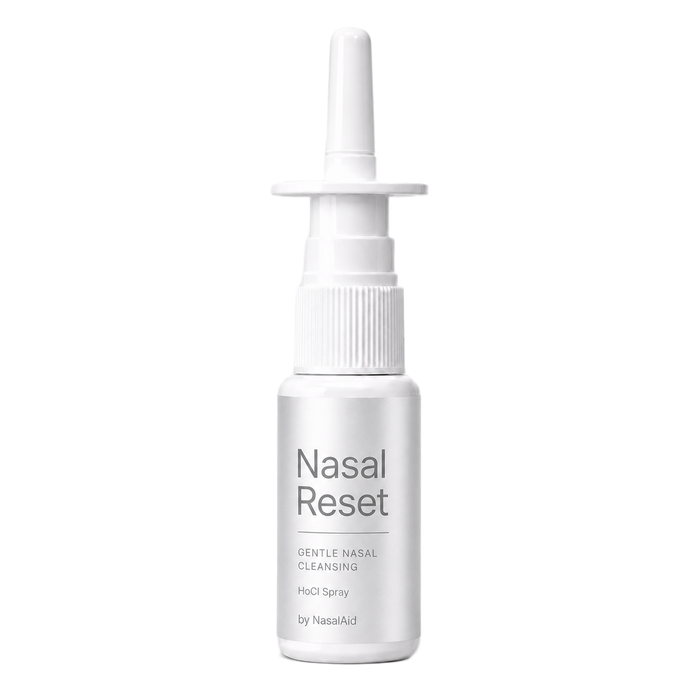
Cleanse your nasal passages
Our 20 mL hypochlorous acid nasal spray cleanses and refreshes your nasal passages. Use it as directed as part of your evening nasal-care routine.
Stuffy nose at night? Cleanse your nasal passages with our hypochlorous acid spray, then gently hold your nasal passages open with the adjustable NasalAid dilator. Two steps for nasal care and easier airflow.
Also available at
Free 2-day shipping
Shop the Nasal Reset Kit · $29.99
Our 20 mL hypochlorous acid nasal spray cleanses and refreshes your nasal passages. Use it as directed as part of your evening nasal-care routine.
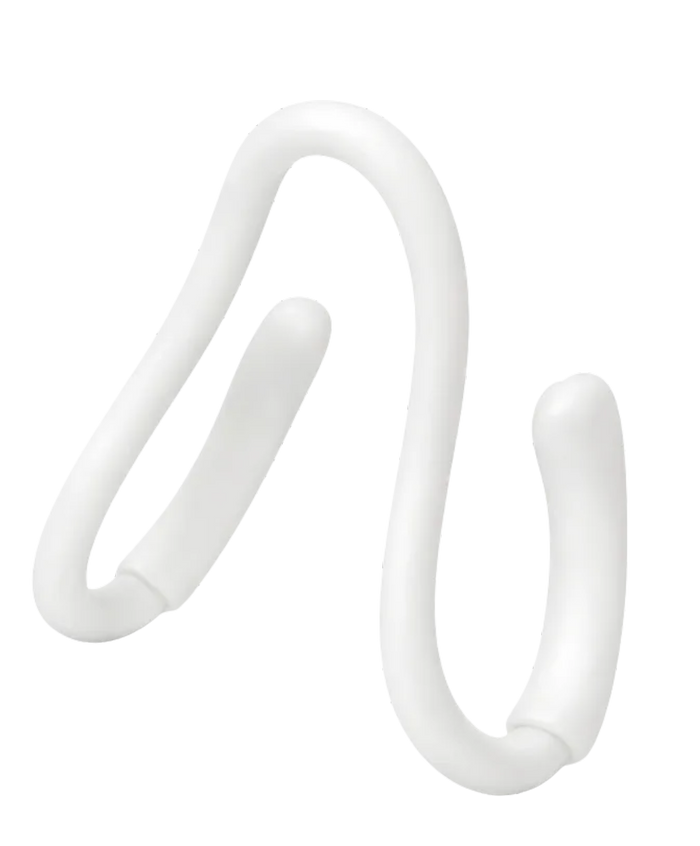
A fully adjustable, reusable nasal dilator made with very soft silicone over a thin, spring-tempered stainless steel wire. Made with implant-grade materials and designed for years of reuse—just keep it clean with soap and water.
NasalAid gently supports the nasal passages from inside your nasal passages. Adjust its width as shown in the fitting guide for a comfortable fit.
Watch how NasalAid sits inside your nostrils. If you toss and turn at night, a small piece of gentle medical tape can help keep the dilator in place. Follow the included fitting guide for placement and adjustment.
Use the cleanser and fit the dilator as directed. NasalAid supports nasal airflow; the cleanser is for cleansing and refreshing. The kit does not treat allergies, sinus infections or sleep apnea.

With Breathe Right, I would still snore at times, but with NasalAid I don’t. I have personalized it to meet my needs.
Personal testimonial about the NasalAid dilator. Individual results vary.
Stuffy nose, trouble breathing through your nose or disrupted sleep? Answer five questions about the past month to get your NOSE symptom score.
Check my nasal symptomsYour score runs from 0–100 and reflects how much nasal blockage affects you. Save your result and date to discuss with a clinician or compare with a later assessment.
The NOSE questionnaire measures reported nasal-obstruction symptoms. It does not measure airflow, diagnose allergies or sleep apnea, or tell you whether NasalAid will work for you.
Our goal is to help you improve nasal function over time, so you may eventually need less nightly support from a dilator or nasal cleanser. What that looks like depends on the cause of your symptoms.
Bring your completed NOSE questionnaire and score to a local ear, nose and throat specialist. They can evaluate what is restricting your nasal breathing and discuss longer-term options.
Ask whether an Aerin Medical procedure is appropriate for you: VivAer for nasal airway obstruction or RhinAer for chronic rhinitis. Your ENT can explain the benefits, risks and alternatives for your particular condition.
At rest, practice gentle, comfortable breathing in and out through your nose. Let your lower ribs and abdomen move with your diaphragm while keeping your shoulders and upper chest relaxed.
Pay attention to the pace and flow of each breath. Aim for an easy, unforced rhythm, without rushing or taking oversized breaths. A respiratory physiotherapist can help you retrain your breathing pattern. If nasal breathing feels obstructed, have the obstruction evaluated rather than forcing it.

Nasal Reset Kit | Nasal Cleanser and Reusable Nasal Dilator
Deliver to 07008
Pickup currently not available
The kit combines two steps: a hypochlorous acid nasal spray to cleanse and refresh the nasal passages, and a reusable nasal dilator to gently hold the nasal passages open and support nasal airflow while worn.
A nasal dilator can provide temporary relief when reduced nasal airflow contributes to the feeling of a blocked nose. NasalAid works physically inside the nasal passages. It does not shrink swollen tissue or correct the underlying cause of persistent congestion.
Nasal cleansing. The 20 mL spray contains hypochlorous acid (HOCl) at 200 ppm (0.02%) and water. Use it to cleanse and refresh the nasal passages according to the label. It is not a medicated decongestant or an allergy treatment.
Nasal congestion can contribute to snoring, but snoring can also originate elsewhere in the airway. NasalAid supports nasal airflow; it is not a guaranteed way to stop snoring. Frequent loud snoring, gasping or witnessed breathing pauses warrant a sleep evaluation.
The dilator can support reduced nasal airflow while worn, and the cleanser provides a nasal-cleansing step. Neither treats the allergic reaction. Ongoing sneezing, itching, a runny nose or allergy congestion may need allergy-specific care.
No. NasalAid supports nasal breathing; it does not treat obstructive or central sleep apnea and does not replace CPAP or other prescribed treatment. Easier nasal breathing or quieter snoring does not show that sleep apnea is controlled.
A blocked nose can make nasal breathing harder, but mouth breathing can have several causes. NasalAid addresses the nasal passages while worn. Persistent mouth breathing or waking with a dry mouth is a reason to look at the cause, especially when accompanied by snoring or daytime sleepiness.
The NasalAid dilator is adjustable. Follow the included fitting guide to shape it for a comfortable fit. Do not force insertion or keep wearing it if it causes pain or irritation.
Follow the spray label and the dilator fitting, cleaning and storage instructions supplied with your kit. The spray is for nasal cleansing; do not substitute it for the dilator’s specified cleaning method.
Check the fit with your sleep clinician or equipment provider first, particularly with nasal pillows. NasalAid must not interfere with your mask or prescribed treatment. Continue CPAP as directed.

Known to us as CG, Stanford sleep medicine pioneer Dr. Christian Guilleminault helped define obstructive sleep apnea and shaped how we think about nasal breathing.
He emphasized restoring nasal function in people with sleep-disordered breathing. His research explored the importance of nasal breathing, including persistent mouth breathing after treatment in children.
He envisioned sleep care through a multidisciplinary clinic, bringing together sleep medicine, ENT, dentistry, orthodontics and other relevant specialties to address each patient’s needs.
His Stanford legacy and photo credit · Research on nasal breathing
Get answers about nighttime congestion, nasal cleansing and dilator fit, plus NasalAid updates.


